
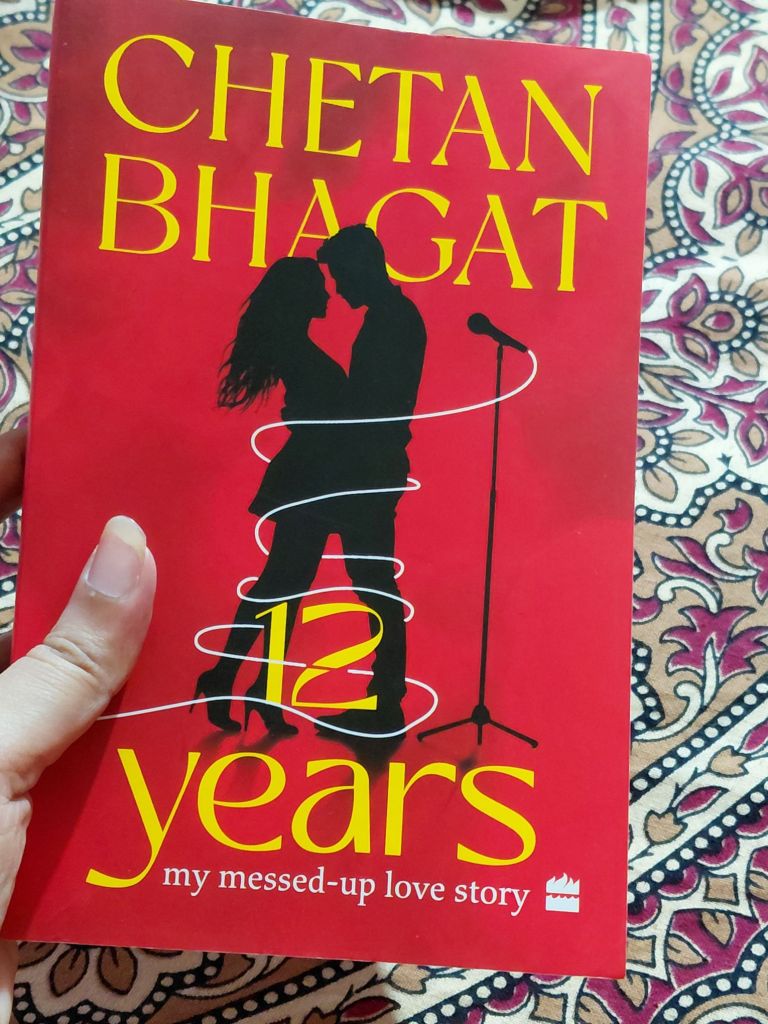
“12 Years: My Messed Up Love Story” by Chetan Bhagat is a fast-paced romance novel that revolves around two lovers whose love life gets complicated due to age differences and emotional issues. This novel is unapologetically Chetan Bhagat; it does not hold back when it comes to drama and crazy situations.
Introduction:
The latest novel by Chetan Bhagat, “12 Years: My Messed Up Love Story,” is a contemporary Indian romance novel that delves deep into the complexities that surround love in different generations. The novel is about a 33-year-old Saket Khurana, who at the point of writing this novel is a 33-year-old man and a former successful finance professional, but now has chosen to leave that life behind and become a stand-up comedian, and a young girl named Payal Jain, who is 21 years old, an upcoming private equity executive from a traditional and conservative Jains’ family. The two of them fall in love with each other in Mumbai.
The tone and themes of the story are portrayed in three different manners:
1. The age gap of twelve years between Saket and Payal portrays the differences between them (culture, emotional, mental, etc.). Not only because of the age gap, but also the possibility to portray the differences between generations of Millenials and Gen Z, all from an author’s perspective.
2. The themes of family expectations, traditional Indian beliefs about marriage, gender roles, and family honor are all there in the book.
3. Saket has numerous emotional issues because of the societal pressure of relationships after his divorce, whereas Payal has even more guilt and emotional issues with her childhood as she discovers herself now that she has rejected her upbringing.
This section compares the writing style of the authors to other authors in the same genre and has many different opinions on how people feel about Bhagat.
It is believed that the writing style of Chetan Bhagat makes the novels easier to understand, but he is also dramatized and unrealistic about some parts of a male’s life. Some people believe that he has written about some far-fetched events in a man’s life.
In the second phase, the critics want to criticize Bhagat for the masculine tone of his book, but Bhagat justifies his masculine tone because of the importance of reality vs. the importance of being politically correct. The third phase shows how the level of the waves in the plot of the book imitates the level of the waves in the reader’s feelings. Many people will want to be entertained by “high drama” in the plot of the book.
Both Payal and Saket have their “AHA!” experiences in the climax of this novel. Payal conveys her turmoil of emotions as a result of being torn between the responsibilities and obligations that she has versus her emotions for Saket in a passive way compared to how Saket conveyed his emotions.
One of the main differences between Saket and Payal’s emotional condition can also be explained by the fact that Saket’s initial condition of emotional suffering is a result of his unrequited love for Payal and his capacity to gain peace in his own self through hope.
Conclusion:
It is clear that the author of this novel, Chetan Bhagat, did a fantastic job of emotionally connecting with his readers in his novel. I think that it was necessary to reach all types of audiences through the use of relatable emotion; therefore, Chetan Bhagat decided to write this non-fictional book to assist the reader in comprehending their own emotions from reading this book, whether it be a regular or first-time book reader.
Book Buy Link: https://amzn.in/d/6njdKsH
“This review is powered by Blogchatter Book Review Program “
https://www.theblogchatter.com
 Amanyas Creative World